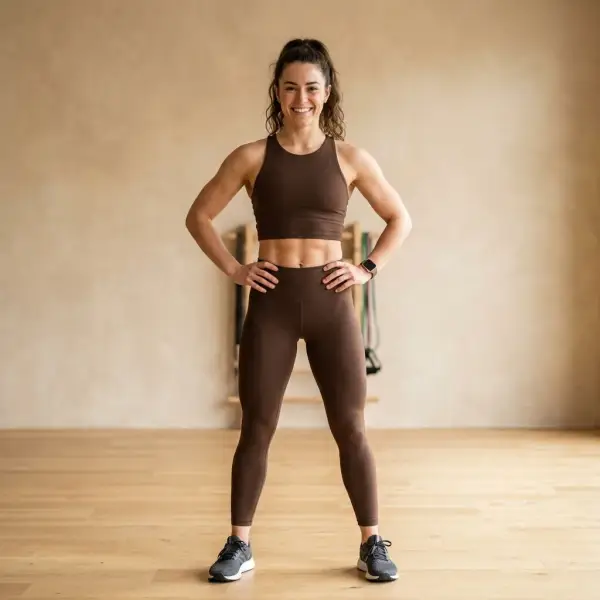
Body Composition: Why Weight Doesn’t Tell the Whole Truth
The scale tells only one number, but it doesn’t differentiate between muscle, fat, water, and bone. Body composition – the ratio of fat to muscle mass – is a much more important measure of health and appearance than weight alone. Two women of the same weight can look and feel completely different due to differences in body composition. Calorie restriction alone without sufficient protein and resistance training leads to loss of both fat and muscle, slowing metabolism and making the body look soft at the same weight. Each kilogram of muscle burns approximately 13 kcal per day at rest, while a kilogram of fat burns only 4 kcal. A healthy body fat percentage for women is 20–30% and for men 10–20%. Body composition can be tracked with waist circumference, photos, and how clothes fit – these tell more than the scale. Resistance training 2–3 times per week, sufficient protein, and a moderate calorie deficit are the keys to improving body composition. Beginners in particular can build muscle and lose fat simultaneously – this phenomenon is called body recomposition. In this case, weight may stay the same or even increase, while the body becomes firmer and healthier. Don’t let the number on the scale discourage you.
Lasting results start here
Find out why weight loss hasn't worked — and how to finally make it stick.
Take the free wellness quiz →Key Facts
- ✓The same weight can look completely different depending on body composition
- ✓Per kilogram of muscle, the body burns approximately 13 kcal at rest; per kilogram of fat, only 4 kcal
- ✓A healthy body fat percentage for women is 20–30% and for men 10–20%
- ✓Resistance training can improve body composition without any change in weight
- ✓Waist circumference is the simplest and most reliable at-home measurement
Body composition refers to the relative proportion of different tissues in the body – muscle, fat, bone, and water – as a share of total weight. It is one of the most important concepts that anyone interested in weight management should understand. Two people of the same weight can look and feel completely different if their body composition is different. This explains why the scale can be misleading and why many feel frustrated when weight doesn’t drop even though the body is visibly improving.
In weight loss, the goal should always be to reduce fat while preserving muscle mass – not just to drop weight. This difference is crucial and has far-reaching consequences. Calorie restriction alone without sufficient protein and resistance training leads to loss of both fat and muscle. As a result of muscle loss, metabolism slows, the body looks soft and flabby at the same weight, and the risk of the yo-yo effect increases significantly. In contrast, when you preserve or build muscle while reducing fat, your metabolism stays high, your body is firm and functional, and results are more lasting.
What does healthy body composition mean in practice? For women, a healthy body fat percentage is typically 20–30%, and for athletic women 18–25%. Below 18% body fat may disrupt hormonal function and menstrual cycle in women. For men, the corresponding figures are 10–20% and 8–15% for athletic men. It’s important to understand that women naturally have a higher body fat percentage, which is biologically normal and healthy – it does not mean overweight.
The importance of muscle mass extends beyond appearance. Each kilogram of muscle burns approximately 13 kcal per day at rest, while a kilogram of fat burns only 4 kcal. A 5 kg increase in muscle mass means about a 45 kcal difference in basal metabolic rate per day – over a year, this equals approximately 16,000 kcal or over 2 kg of fat. Muscle mass also improves insulin sensitivity, supports bone health, improves posture, and reduces the risk of everyday injuries.
Body composition can be tracked in several ways, each with its strengths and weaknesses. A DEXA scan (dual-energy X-ray absorptiometry) is the most accurate method and divides the body into fat, muscle, and bone mass. It is available in major cities and typically costs 50–100 euros. A bioimpedance scale is the most practical home measurement – it sends an electrical current through the body and estimates body fat percentage. It’s not as accurate as DEXA, but tracks changes over time reasonably well, as long as you always measure at the same time under the same conditions (in the morning before eating and drinking).
The simplest and most reliable home measurement is waist circumference. Measure at the navel level against bare skin, at the end of a normal exhalation. For women, over 80 cm indicates mildly elevated and over 88 cm clearly elevated metabolic risk. Waist circumference specifically reflects visceral fat levels, which is the most health-significant type of fat.
Practical tips for improving body composition: do resistance training 2–3 times per week, eat sufficient protein (1.6–2.2 g/kg), keep the calorie deficit moderate (300–500 kcal), and sleep well. Track your progress with waist circumference, how clothes fit, and photos rather than the scale. Take comparison photos once a month under the same conditions – changes you don’t notice in the mirror often show clearly in photos.
Don’t let the number on the scale discourage you. If you’re doing resistance training and eating protein, it’s entirely possible that your body is changing for the better even if weight stays the same or even increases. Clothes fit better, energy improves, and the mirror image pleases – these are the real measures of progress.

Want to know where you stand?
A 2-minute quiz reveals your personal barriers and the solution.
Find out your situation →Frequently Asked Questions
How do I measure my body composition at home?
The simplest way is to measure waist circumference at the navel. For women, over 88 cm and for men over 102 cm indicates elevated health risk. A bioimpedance scale provides an estimate of body fat percentage.
Can weight increase while getting leaner?
Yes! If you start resistance training, muscle mass can grow while fat mass decreases. Weight stays the same or increases, but you look slimmer and healthier.
How quickly does body composition change?
Visible changes in body composition can be observed in 4–8 weeks with regular training and proper nutrition. Significant change takes 3–6 months.
Why does the scale show different numbers on different days?
Daily weight fluctuation (0.5–2 kg) is due to fluid balance, food weight in the intestines, menstrual cycle phase, and sodium intake. This is not fat. Track weekly averages instead of individual days.
Can body composition be improved without losing weight?
Yes, beginners in particular can build muscle and reduce fat simultaneously (recomposition). This requires sufficient protein and resistance training, but the calorie deficit doesn’t need to be large. Weight may stay the same, but your body becomes firmer.
Related Topics
Last updated:
Disclaimer: This page contains general health and wellness information and does not replace the advice of a doctor, dietitian, or other healthcare professional. Always consult your doctor before making significant changes to your diet or exercise routine, especially if you have underlying health conditions, are on medication, or are pregnant.
Lasting results start here
Find out why weight loss hasn't worked — and how to finally make it stick.
Take the free wellness quiz →