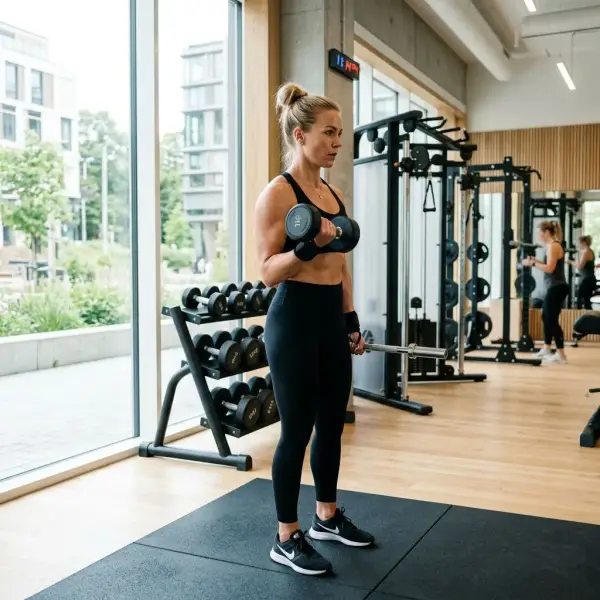
Progressive Overload
Progressive overload means gradually increasing exercise difficulty so that the body continues to develop.
Progressive overload is a fundamental principle of training that means gradually increasing exercise difficulty over time. The body is an adaptation machine: it adjusts to almost any stimulus within 2-6 weeks. If training stays the same, the body has no reason to develop, and results stall. This is why the load must be systematically increased.
Progression can happen in several ways: increasing weight (e.g., adding 2.5 kg to squats), increasing reps (from 8 to 12 with the same weight), adding sets, increasing range of motion, shortening rest between sets, or increasing training frequency. The key is that some variable progresses over time.
For beginners, progression is rapid and rewarding - so-called 'newbie gains' allow weight increases nearly every week for the first 6-12 months. For example, squats might start at 20 kg and reach 60 kg in six months. For advanced trainees, progression slows significantly, requiring periodization: alternating lighter and heavier weeks.
For weight management, progressive overload is important because it keeps training effective and maintains muscle mass during a calorie deficit. Without progression, the body doesn't receive a sufficient signal to preserve muscle mass, and muscle can be lost during weight loss.
Practical tip: keep a training log where you record weights, reps, and sets. Without tracking, you can't know if you're progressing. Progressive overload is connected to muscle mass and EPOC concepts.
Want to know where you stand?
A 2-minute quiz reveals your personal barriers and the solution.
Find out your situation →Related Terms
Read more from the blog
Last updated:
Disclaimer: This page contains general health and wellness information and does not replace the advice of a doctor, dietitian, or other healthcare professional. Always consult your doctor before making significant changes to your diet or exercise routine, especially if you have underlying health conditions, are on medication, or are pregnant.
Lasting results start here
Find out why weight loss hasn't worked — and how to finally make it stick.
Take the free wellness quiz →