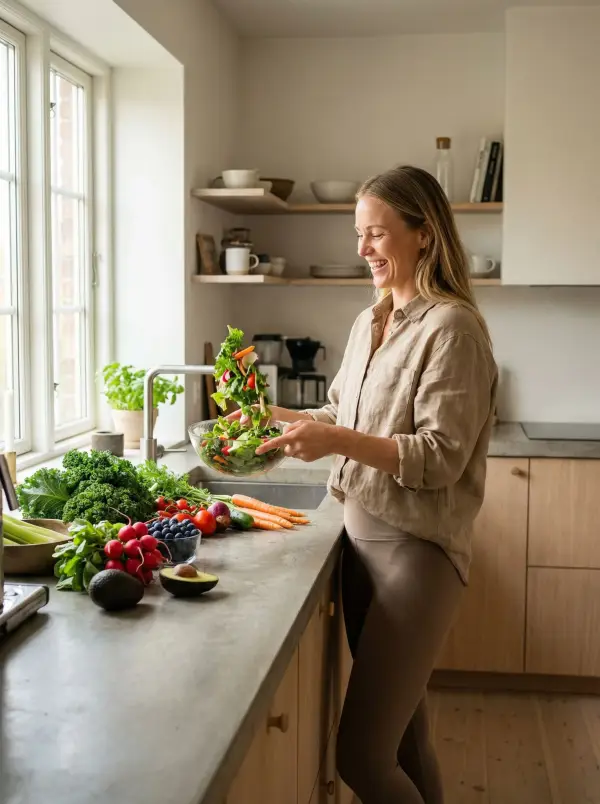
Volume Eating
Volume eating is a dietary strategy that favors large portions of low-calorie foods to achieve satiety.
Volume eating is based on a simple principle: eat a lot of food that has few calories relative to its weight and volume. This helps you stay full during a calorie deficit without constant hunger.
Low-energy foods share a high water and fiber content. Practical examples: vegetables (cucumber, tomato, lettuce, zucchini), berries, watermelon, boiled potato, soups, and salads. For example, 400 g of cucumber contains only about 60 kcal - the same as a single piece of chocolate.
Fiber is an important ally of volume eating. It slows stomach emptying, keeps blood sugar stable, and feeds beneficial gut bacteria. The goal is at least 25-30 g of fiber per day.
Practical tips: start meals with a large salad or soup, add vegetables to every meal, use berries and fruits instead of candy. This way you eat physically large portions with fewer calories.
Volume eating is an especially useful strategy for those who find hunger the biggest challenge of weight loss. It doesn't require special diets - just smart choices from everyday ingredients.
Want to know where you stand?
A 2-minute quiz reveals your personal barriers and the solution.
Find out your situation →Related Terms
Read more about the topic
Read more from the blog
Last updated:
Disclaimer: This page contains general health and wellness information and does not replace the advice of a doctor, dietitian, or other healthcare professional. Always consult your doctor before making significant changes to your diet or exercise routine, especially if you have underlying health conditions, are on medication, or are pregnant.
Lasting results start here
Find out why weight loss hasn't worked — and how to finally make it stick.
Take the free wellness quiz →